Every UK business has responsibilities. To its people. To its clients & To the environment. And to the quality of what it delivers.
Most businesses manage these things separately, with different teams, different policies, and different systems. That approach creates gaps. It wastes time. And it leaves businesses exposed to risks they do not even know about.
SHEQ changes all of that.
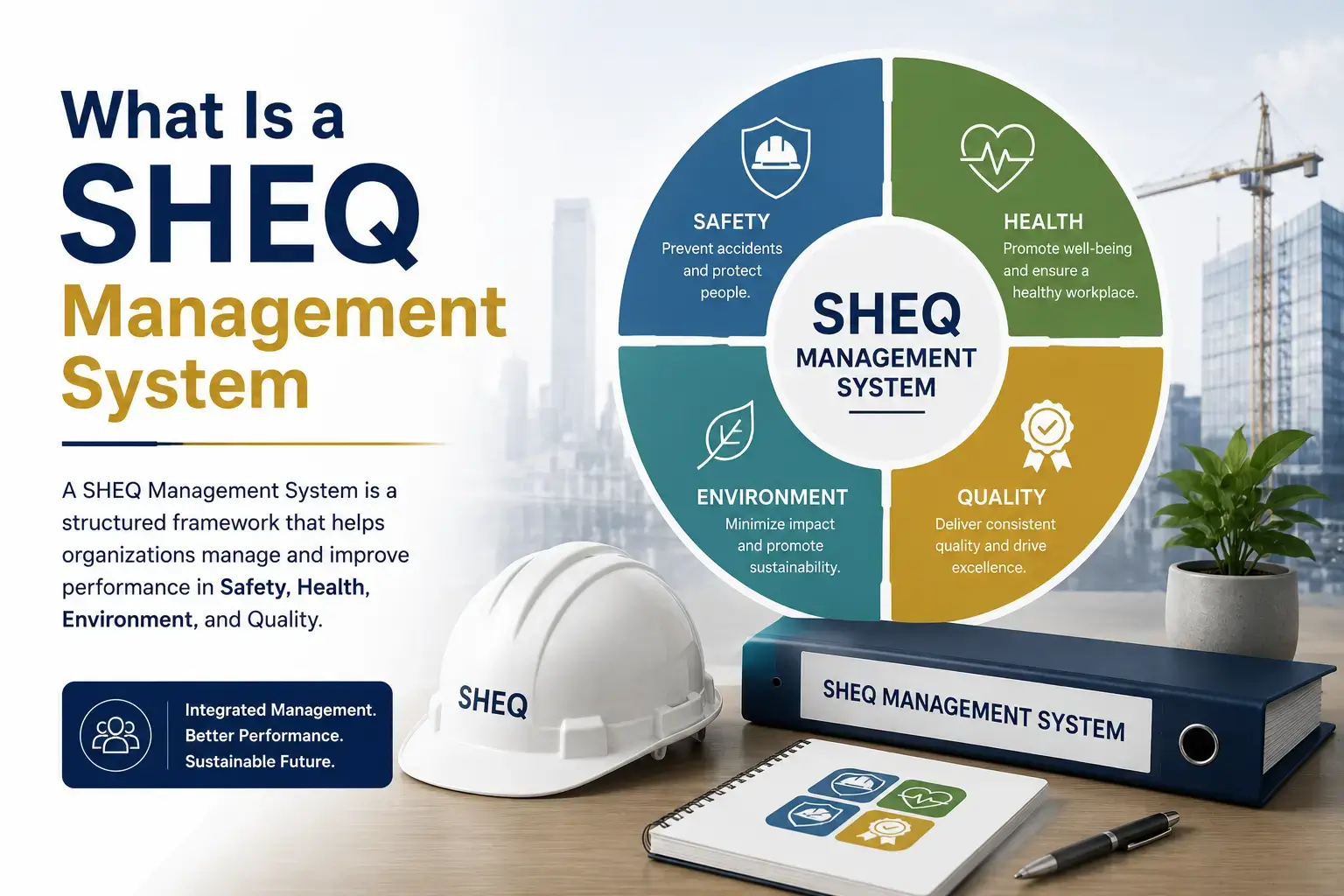
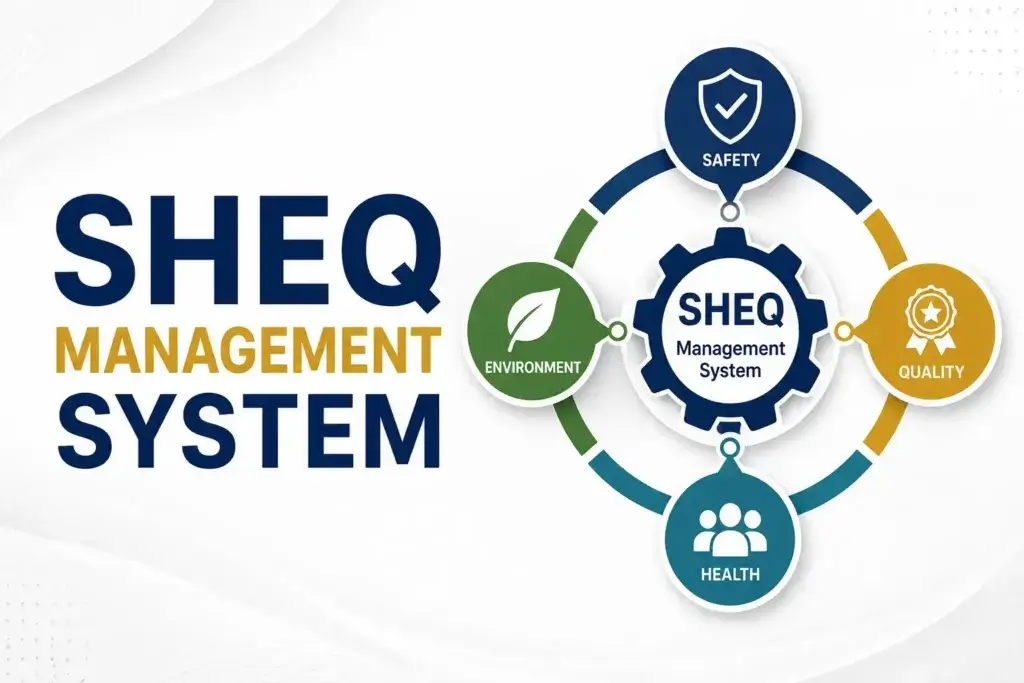
SHEQ stands for Safety, Health, Environment, and Quality, the four essential pillars that ensure businesses operate responsibly, efficiently, and in compliance with regulations.
A SHEQ management system brings all four together into one integrated framework. One set of policies. One approach. One system that covers everything.
This guide explains exactly what SHEQ means, what a SHEQ management system involves, and why UK businesses are increasingly building one not just for compliance, but for genuine competitive advantage.
At BizGrow Holdings, we help UK businesses design and implement SHEQ management systems that work. Let us walk you through everything.
What Is SHEQ?
SHEQ is the acronym for Safety, Health, Environment and Quality. It simply refers to the integration of three basic management systems: ISO 14001:2015 Environmental Management System, ISO 45001:2018 Occupational Health and Safety Management System, and ISO 9001:2015 Quality Management System.
SHEQ combines these elements because they are interconnected; a failure in one can affect the others. Businesses adopt an integrated approach to ensure legal compliance and avoid penalties, manage risk and prevent workplace incidents, improve efficiency by streamlining operations, and enhance reputation through sustainability and quality assurance.
In plain terms, SHEQ is a way of running your business that covers safety, health, environmental responsibility, and quality all at once through one coherent system rather than four separate ones.
It is not a single standard issued by one body. It is a concept and approach to integrated management that UK and international businesses increasingly adopt to simplify compliance and improve performance across all four areas simultaneously.
SHEQ Full Form | What Does SHEQ Stand For?
SHEQ is an acronym for Safety, Health, Environment and Quality. This acronym is most commonly used regarding workplace SHEQ management.
Breaking it down:
- S: Safety: protecting your workers and others from workplace accidents, injuries, and hazards
- H: Health: protecting the physical and mental well-being of your workforce
- E: Environment: minimising your business’s negative impact on the natural environment
- Q: Quality: ensuring your products and services consistently meet the required standard
You may also see variations of this acronym used in different contexts:
- HSEQ: where Health comes before Safety (common in oil, gas, and energy sectors)
- QHSE: where Quality is listed first (used in some manufacturing and engineering environments)
- QSHE: another variation seen in some European and international businesses
All of these variations refer to the same integrated management concept. In the UK construction, facilities management, and security sectors, SHEQ is the most commonly used term.
What Is a SHEQ Management System?
A SHEQ Management System is a structured framework that helps organisations manage their Safety, Health, Environmental, and Quality responsibilities in a consistent and integrated way. It brings together policies, procedures, and processes to ensure that all aspects of SHEQ are effectively controlled, monitored, and improved over time.
Think of it as the operating system of your business. Just as every computer needs an operating system to manage all its functions, your business needs a management system to manage all its SHEQ responsibilities in one place, consistently, and without duplication.
The integrated management system combines the processes, methods and tools that are required to perform various safety, health, environment and quality-related tasks in one coherent structure.
A SHEQ management system typically includes:
- A documented SHEQ policy signed by senior leadership
- Risk assessments covering all significant workplace hazards
- Environmental aspect and impact assessments
- Quality control and non-conformance procedures
- Training and competence frameworks for all staff
- Internal audit programmes
- Incident reporting and investigation processes
- Legal compliance registers
- Management review processes
- Performance monitoring and measurement systems
- Continual improvement processes
Businesses typically make use of management systems individually, but by integrating these three standards, organisations can combine all their systems and processes into one complete framework. This results in a compact management system that is more effective, more efficient and easier to follow than having several separate systems.
The Four Pillars of SHEQ
Safety
Safety focuses on preventing accidents and hazards in the workplace. It involves risk assessments, training, and protective measures to safeguard employees. High-risk sectors like construction, manufacturing, and transport rely heavily on strict safety protocols.
In your SHEQ management system, the safety pillar covers your compliance with the Health and Safety at Work Act 1974, the Management of Health and Safety at Work Regulations 1999, and all sector-specific health and safety legislation. It requires documented risk assessments, method statements, safe systems of work, and evidence that your staff understand and follow them.
Safety is not just about preventing accidents. It is about creating a workplace culture where people look out for each other, hazards are reported before they cause harm, and continuous improvement is built into everyday operations.
Health
Health covers both physical and mental well-being, including occupational illnesses, stress management, and workplace hygiene. A strong health framework reduces absenteeism and boosts productivity, ensuring compliance with regulations like the UK’s Health and Safety at Work Act 1974.
In practice, the health pillar covers occupational health surveillance, regular health checks for workers exposed to specific risks such as noise, vibration, dust, or hazardous substances. It also covers mental health policies, lone worker procedures, return-to-work processes, and welfare provisions.
With mental health challenges now a leading cause of workplace absence in the UK, the H in SHEQ carries more weight than ever. A well-designed SHEQ management system treats mental health with the same seriousness as physical health.
Environment
Environmental management means minimising your business’s negative impact on the natural world, managing waste, reducing emissions, controlling water usage, and complying with environmental legislation.
In the UK, the Environmental Protection Act 1990, the Environment Act 2021, and a growing range of sector-specific regulations set out what businesses must do. Compliance is the minimum. Leading businesses use their SHEQ system to go further, reducing their environmental footprint, demonstrating sustainability credentials to clients, and building a reputation for responsible operations.
For UK businesses seeking ISO 14001 certification, the environmental pillar is where the formal management system requirements are most concentrated.
Quality
Quality assurance ensures that products and services consistently meet customer expectations. It focuses on reducing defects, streamlining processes, and maintaining high standards throughout the business.
The quality pillar in a SHEQ management system is typically aligned with ISO 9001, the world’s most widely adopted quality management standard. It covers how you plan your work, how you manage your processes, how you handle non-conformances, and how you use customer feedback to drive improvement.
Quality and safety are not in tension. A culture that takes quality seriously tends to take safety seriously too. Both require attention to detail, process discipline, and a genuine commitment to getting things right the first time.
SHEQ Meaning in Safety | Why Safety Comes First
In most SHEQ frameworks, Safety is listed first, and that is deliberate.
Safety focuses on preventing accidents and hazards in the workplace. In safety, SHEQ means building systematic processes to identify, assess, and control all hazards before they cause harm.
In terms of safety, the SHEQ management system provides documented, auditable evidence that your business takes workplace safety seriously. This matters for several reasons:
Legal compliance. The Health and Safety at Work Act 1974 requires employers to provide a safe working environment, safe systems of work, and appropriate training and supervision. A SHEQ management system is a structured way to demonstrate compliance.
HSE inspections. If the Health and Safety Executive (HSE) visits your premises, they will want to see evidence that your business has identified risks, put controls in place, and trained staff appropriately. A SHEQ management system provides exactly that evidence.
Incident prevention. Most workplace accidents are preventable. The systematic risk assessment and control process at the heart of a SHEQ system identifies hazards before they cause harm, reducing incident rates and protecting your people.
Insurance and liability. In the event of an accident or incident, your insurance position and your legal exposure both depend on whether you can demonstrate that you took reasonable steps to manage the risk. A documented SHEQ management system is a demonstration.
Key Components of a SHEQ Management System
SHEQ Policy
Your SHEQ policy is the foundation. It is a formal, documented statement signed by senior leadership that sets out your organisation’s commitments across all four pillars: safety, health, environment, and quality.
A SHEQ Manager is responsible for leading and overseeing an organisation’s approach to Safety, Health, Environment, and Quality. Their primary role is to ensure that all operational activities comply with legal requirements, industry standards, and internal policies while promoting a culture of continuous improvement and risk awareness.
Your SHEQ policy must be:
- Signed and dated by the Managing Director or CEO
- Reviewed and updated at least annually
- Communicated to all staff and available to interested parties
- Relevant to your actual business activities, not a generic template
- Setting clear commitments to legal compliance and continual improvement
SHEQ Procedures
A SHEQ Manager is responsible for developing and implementing SHEQ policies and procedures, conducting regular risk assessments and internal audits.
SHEQ procedures are the documented instructions that tell your people how to carry out specific activities safely, responsibly, and to the required quality standard. They cover everything from how to carry out a risk assessment, to how to manage environmental waste to how to handle a customer complaint.
Good SHEQ procedures are clear, practical, and followed in reality, not just written and filed. The main SHEQ processes are tied into ISO Standards, and the management processes typically contain stages including initial status review, policy development, organising management structures, planning and implementation, investigations and response, and internal and external audit.
Risk Assessments and Controls
Risk assessment sits at the heart of SHEQ management. You cannot manage what you have not identified. Your SHEQ system requires:
- Health and safety risk assessments covering all significant workplace hazards
- Environmental aspect and impact assessments, identifying how your operations affect the environment
- Quality risk assessment identifying risks to product or service quality
- Regular review of all assessments, particularly after incidents or significant changes
Controls must be documented, implemented, and monitored. Identifying a risk without controlling it is not compliance; it is evidence of a known, unmanaged hazard.
Training and Competence
Your SHEQ management system is only as effective as the people who implement it. Training and competence records cover:
- Induction training for all new staff
- Job-specific SHEQ training relevant to each role
- Legal and regulatory awareness training
- Records of toolbox talks, site briefings, and ongoing training
- Evidence of refresher training at required intervals
To be effective in a SHEQ role, professionals must possess a strong understanding of risk management and hazard identification, along with up-to-date knowledge of health and safety legislation, environmental laws, and quality standards such as ISO 9001, ISO 14001, and ISO 45001.
Monitoring and Performance Review
A SHEQ management system is never static. It must be monitored and reviewed continuously. This includes:
- Regular internal audits check that procedures are being followed
- Management review meetings, senior leadership reviewing SHEQ performance data
- Incident investigation learning from accidents and near misses
- Customer satisfaction measurement, tracking, and quality performance
- Environmental performance data, energy, waste, and emissions monitoring
- Legal compliance checks ensure all regulatory requirements are met
The output of monitoring feeds back into the system, driving the continual improvement that is central to all three underpinning ISO standards.
SHEQ Compliance | What Does It Mean for UK Businesses?
SHEQ compliance means your business meets all the legal, regulatory, and contractual requirements across all four pillars of the framework.
In the UK in 2026, SHEQ compliance is increasingly a commercial necessity as well as a legal one. Here is why:
Client requirements. Major clients in construction, facilities management, energy, and the public sector increasingly require suppliers to hold ISO 45001, ISO 14001, and ISO 9001 certifications individually or as part of an integrated SHEQ management system. Without these, you cannot tender for their work.
Supply chain scrutiny. Main contractors and tier-1 suppliers are asking harder questions about SHEQ compliance throughout their supply chains. Businesses that cannot demonstrate compliance are being delisted from approved supplier registers.
Insurance requirements. Insurers are increasingly factoring SHEQ compliance into their risk assessments. Businesses with documented, audited SHEQ systems typically present a lower risk profile.
Regulatory enforcement. The HSE, Environment Agency, and Trading Standards all enforce compliance with SHEQ-related legislation. Documented systems demonstrate that you take compliance seriously and make enforcement action less likely.
SHEQ Standards | ISO 45001, ISO 14001 and ISO 9001
To form a SHEQ management system, the following standards must be combined: ISO 14001:2015, which outlines the requirements for an effective environmental management system; ISO 45001:2018, which helps businesses reduce workplace risks and ultimately eliminate work-related accidents; and ISO 9001:2015, the Quality Management standard.
All three share a common structure, the High Level Structure (HLS), which makes integration far simpler than managing three separate systems. The core elements of planning, support, operation, performance evaluation, and improvement are aligned across all three.
SHEQ applies several disciplines for continuous improvement of Occupational Health and Safety (ISO 45001), Environmental (ISO 14001) and Quality (ISO 9001) factors. This is accomplished by developing processes that move programmes through a structured cycle, the Plan-Do-Check-Act (PDCA) cycle.
The benefits of combining all three into one SHEQ management system include:
- No chance of a certain management system being regarded as superior; all three are equally important
- Consistent objectives, planning, and document management across all areas
- A single internal audit programme covering all three standards
- One management review meeting that covers SHEQ performance holistically
- Reduced duplication and administrative burden
- A stronger, more coherent framework for continuous improvement
Benefits of Implementing SHEQ Systems
Why invest in a SHEQ management system? Here are the real, practical benefits for UK businesses:
Legal compliance. Your business meets its obligations under health and safety law, environmental legislation, and quality regulations, reducing the risk of fines, enforcement action, or prosecution.
Win more contracts. Clients increasingly require certified management systems as part of their supply chain approval process. ISO certification opens new opportunities and removes barriers to tendering.
Reduce incidents and costs. Fewer workplace accidents mean less downtime, lower insurance claims, and reduced investigation time. Fewer quality failures mean less rework, fewer complaints, and stronger client relationships.
Improve efficiency. A well-implemented SHEQ system reduces downtime, minimises waste, and improves processes, creating a safer, more sustainable, and high-performing workplace.
Enhance reputation. SHEQ certification signals to the market that you operate responsibly, professionally, and to recognised standards. That reputation attracts better clients and better staff.
Support staff wellbeing. Employees who work for organisations that take SHEQ seriously feel safer, healthier, and more valued. This supports recruitment, retention, and productivity.
Drive continual improvement. The audit, review, and improvement cycle built into a SHEQ management system keeps your business getting better year on year, systematically.
SHEQ Management in Practice | How It Works Day to Day
A SHEQ management system is not just a set of documents on a server. It is a living system that shapes how your business operates every day.
In practice, this means:
- Morning briefings include SHEQ topics, toolbox talks, hazard spotting, and quality reminders
- Site visits and inspections are carried out regularly against documented checklists
- Non-conformances are reported and investigated, not ignored or covered up
- Staff raise concerns through a clear reporting process and are confident that they will be acted upon
- Management reviews SHEQ data regularly, not just at annual audits
- Suppliers and subcontractors are assessed against SHEQ criteria before appointment
- Customers receive consistent quality because processes are documented and followed
- Environmental performance is tracked, and improvement targets are set and monitored
SHEQ Managers work on-site, delivering frontline SHEQ advice and training to line managers and the workforce. It is a role split between the office and the site, with frequent contact with other stakeholders, making it a busy profession in practice.
The system only works if the people who lead the business are genuinely committed to it. SHEQ cannot be delegated entirely to a manager or consultant. Senior leadership must own it, model it, and drive it.
Industries That Use SHEQ Management in the UK
SHEQ specialists focus on the Safety, Health, Environment and Quality assurance side of the built environment, and the role is not specific to the built environment professionals. In this area have transferable skills that can be taken to other industries and sectors.
SHEQ management systems are used across virtually every UK industry, but they are most prevalent in:
- Construction high-risk working environments, strong client demand for ISO certification, and regulatory scrutiny
- Facilities management diverse workforces, multi-site operations, complex client requirements
- Security duty of care, SIA ACS requirements, public sector contracts
- Manufacturing product quality, environmental compliance, and worker safety
- Energy and utilities high-hazard environments, critical national infrastructure
- Transport and logistics driver safety, environmental impact, and service quality
- Healthcare patient and staff safety, quality of care, and regulatory compliance
- Education, campus safety, safeguarding, and environmental management
- Oil and gas one of the earliest adopters of integrated SHEQ management globally
For businesses in these sectors, a SHEQ management system is not just good practice. It is increasingly a contractual and commercial prerequisite.
How BizGrow Holdings Helps You Build a SHEQ System
At BizGrow Holdings, we provide end-to-end support for UK businesses building, implementing, and certifying SHEQ management systems.
We work with businesses across construction, facilities management, security, professional services, and the public sector. We understand what certification bodies look for, what clients expect, and what it takes to build a system that genuinely works, not just one that satisfies auditors.
Here is what we do:
- Gap analysis, we assess your current position against ISO 45001, ISO 14001, and ISO 9001, and identify exactly what needs to change
- SHEQ policy development, we write a clear, tailored SHEQ policy that reflects your actual operations
- In procedure and process development, we build the documented procedures your system needs across all four pillars
- Risk assessment supports health and safety risk assessments, environmental assessments, and impact assessments
- In the legal register, we identify all applicable legal and regulatory requirements for your business
- Training support, we help you develop staff awareness and SHEQ training for your team
- Internal audit, we carry out or support your internal audit programme
- Management review facilitation, we help you run effective management reviews that drive real improvement
- In ISO certification preparation, we make sure you are genuinely ready before the external assessor arrives
- Integrated system design, we build ISO 45001, ISO 14001, and ISO 9001 as one coherent SHEQ system
- Ongoing advisory support, we stay with you through surveillance audits and recertification
Our goal is simple: help you build a SHEQ management system that genuinely works for your business and helps you win contracts, protect your people, and build a stronger operation.
Visit bizgrow-holdings.com to speak with our team today.
Conclusion | Make SHEQ Work for Your Business
A SHEQ management system is one of the most powerful tools a UK business can have in 2026.
It brings safety, health, environmental management, and quality together into one coherent framework. It drives efficiency & it builds trust with clients. And it creates the culture of continuous improvement that separates growing businesses from stagnating ones.
Neglecting SHEQ can lead to serious consequences, such as injuries, fines, environmental damage, and reputational harm. A proactive approach, on the other hand, builds resilience and long-term value.
UK businesses that invest in SHEQ management are winning more contracts, satisfying more clients, and building more sustainable operations. Those that do not are increasingly finding themselves on the wrong side of procurement requirements, insurance assessments, and regulatory scrutiny.
BizGrow Holdings is here to help you get it right. Visit bizgrow-holdings.com today.
FAQs About SHEQ Management Systems in the UK
1. What does SHEQ stand for?
SHEQ stands for Safety, Health, Environment and Quality. It refers to the integrated management of all four disciplines within one coherent business management framework, typically combining ISO 45001, ISO 14001 and ISO 9001.
2. What is the difference between SHEQ and HSE?
HSE is the Health and Safety Executive, the UK’s statutory regulator for workplace health and safety. SHEQ is a business management approach covering safety, health, environment and quality. Your SHEQ system helps you meet the standards HSE enforces.
3. Is a SHEQ management system a legal requirement?
SHEQ certification is not a legal requirement for most businesses. However, health and safety management is legally required under the Health and Safety at Work Act 1974, and ISO certification is increasingly demanded by major clients and procurement frameworks as a contractual minimum.
4. What industries need SHEQ compliance in the UK?
SHEQ is most prevalent in construction, facilities management, security, manufacturing, energy, transport, healthcare, and the public sector. Any UK business operating in high-risk environments or supplying major commercial clients will benefit significantly from a formal SHEQ management system.
5. How do you implement a SHEQ management system?
Start with a gap analysis against ISO 45001, ISO 14001 and ISO 9001. Develop your SHEQ policy, procedures, and risk assessments. Train your staff, run internal audits, and book your external certification assessment. BizGrow Holdings supports you through every stage. Visit bizgrow-holdings.com to get started.