Every UK business wants a safe workplace. However, accidents still happen every day. They cost time, money, and trust. That is why ISO 45001 requirements matter. They help you spot dangers early and prevent harm before it happens. ISO 45001 is the world standard for health and safety at work. It gives you a clear system to identify risks and control them. Also, it shows clients that you take safety seriously. ISO 45001 requirements are simple once you know the basics. Let us start with who needs them and what each clause means.
What Is ISO 45001?
ISO 45001 is an international standard for occupational health and safety management systems. The current version is ISO 45001:2018.
It helps a business to:
⦁ Find hazards at work
⦁ Reduce injuries and illnesses
⦁ Follow safety laws
⦁ Improve safety every year
The standard fits any business. For example, a small cleaning firm can use it. Similarly, a large construction group can use it too. ISO 45001 does not give you a rule for every single job. Instead, it gives you a framework. You then build a system that suits your work, your sites, and your people. The system runs in a simple loop: plan, do, check, and act. Because of this loop, your safety work stays active. Otherwise, it becomes a file that nobody reads.
Is ISO 45001 a legal requirement in the UK?
No, ISO 45001 is not a law in the UK. It is a voluntary standard. You choose whether to follow it. However, safety laws are not optional. Every employer must protect workers and anyone else affected by the work. ISO 45001 helps you meet these duties in an organised way. Besides, many clients ask for it. Councils, main contractors and large buyers often want certified suppliers. Therefore, the standard can help you win work, even when the law does not demand it.
Who Actually Needs ISO 45001 Certification?
Any UK business can use ISO 45001. Still, it suits two types of firms best. These are companies with higher risks and companies that bid for bigger contracts.
Common users include:
⦁ Construction and civil engineering firms
⦁ Cleaning and facilities companies
⦁ Manufacturers and warehouses
⦁ Security and service providers
Sometimes, a client will ask for it. In fact, many tender forms now include safety questions. Certification gives you a clear and trusted answer. Even if nobody asks, the standard still helps. It lowers accidents and keeps work running smoothly.
Construction Companies
Construction is one of the riskiest industries in the UK. Workers face falls, moving vehicles, dust, noise, and heavy tools. ISO 45001 requirements help builders control these dangers. For example, they set clear rules for site planning, training, and checks.
Builders gain several benefits:
⦁ Fewer site accidents
⦁ Better records for audits
⦁ Stronger bids for public and private tenders
⦁ Smoother work with main contractors
Moreover, the standard fits well with CDM duties. So you get one system for all your safety tasks.
Cleaning Companies
Cleaning looks simple, but it carries real risks. Staff use chemicals, work at height, and lift heavy items. In addition, many work alone or at night. ISO 45001 helps cleaning firms manage these risks. For instance, it supports safe chemical handling under COSHH rules. It also improves training and supervision.
Cleaning businesses gain:
⦁ Safer work in client buildings
⦁ Clear lone-worker procedures
⦁ Better training records
⦁ More trust from facilities managers
As a result, certified cleaning firms often stand out. Many commercial clients now prefer them.
What Are the Main Requirements for ISO 45001?
ISO 45001 has ten clauses. Clauses 1 to 3 are only introductions. The real ISO 45001 requirements sit in clauses 4 to 10. Clause 4 is about context. First, you must understand your business. Then you must know your risks, your workers, and the people who care about your safety record. After that, you set the scope of your system. Next, clauses 5 to 10 cover leadership, planning, support, operations, checking, and improvement. Each clause builds on the one before it. Together, they form a complete safety system.
Leadership and Worker Participation (Clause 5)
Safety starts at the top. Therefore, senior managers must lead by example.
Leaders must:
⦁ Write a clear safety policy
⦁ Give people roles and duties
⦁ Provide time and resources
⦁ Support a safe culture
Workers must also take part. In fact, this is a key ISO 45001 requirement. You must ask staff for their views and listen to them. For example, hold regular safety talks. Also, let workers help with risk checks. Most importantly, make it easy to report a hazard without fear of blame. When staff feel heard, they speak up sooner. As a result, you can fix problems before anyone gets hurt.
Risk Assessment and Planning (Clause 6)
This clause is the heart of the standard. Here, you plan how to find and manage risks. First, identify hazards. Look at tasks, tools, places, and people. Then, judge how serious each risk is.
Next, choose your controls. Use the hierarchy of controls:
⦁ Remove the hazard
⦁ Replace it with something safer
⦁ Use engineering controls
⦁ Use safe working methods
⦁ Use PPE as the last step
In addition, you must list your legal duties. After that, set safety goals. Goals should be clear and easy to measure, such as fewer incidents on site. Finally, plan how to reach each goal. Give every task an owner and a date.
Training and Documentation (Clause 7)
Clause 7 covers support. It makes sure your people and systems can deliver the plan. First, workers must be competent. So give training for each job and keep records as proof. Second, communication matters. Staff should know the policy, the risks, and what to do in an emergency.
Documents matter too. Keep these on file:
⦁ Your safety policy
⦁ Risk assessments
⦁ Training records
⦁ Audit and incident reports
Keep papers simple and up to date. Also, control who can edit them. In the end, good records protect you during audits, claims, and inspections.
Operational Controls (Clause 8)
Clause 8 turns your safety plans into daily action. It covers how you run work safely. Without it, even the best plan stays on paper.
⦁ First, set up controls for your key risks. These may include safe systems of work, permits, and site rules.
⦁ Second, manage change. Before you bring in a new machine, process, or site, check the risks.
⦁ Third, watch your contractors. Make sure suppliers and subcontractors follow your safety rules.
⦁ Finally, prepare for emergencies. Plan for fire, injury, and spills. Then run drills to test your plans.
Strong operational controls keep your workplace steady. Because of this, you face fewer surprises. Also, your team knows exactly what to do on every job.
Audits and Continual Improvement (Clauses 9-10)
Clause 9 asks you to check your results. Track data such as accidents, near misses, and training levels. Also, you must run internal audits. An audit shows whether your system works as planned. After that, management must review the results at set times.
Clause 10 is about improvement. When something goes wrong, find the root cause. Then fix it so it does not happen again.
Good habits include:
⦁ Report every near miss
⦁ Review incidents quickly
⦁ Share lessons with staff
⦁ Update your risk assessments
Safety never ends. For this reason, the loop must keep running.
How to apply for ISO 45001 Certification in the UK?
Getting ISO 45001 certification in the UK is a clear process. Most businesses follow these steps:
⦁ Check your current safety system (gap analysis)
⦁ Build or update your policies and processes
⦁ Train your team
⦁ Run an internal audit
⦁ Hold a management review
⦁ Book an external audit
The external audit has two stages.
Stage 1: checks your paperwork and readiness.
Stage 2: checks that you follow your system in real work. If you pass, you receive a certificate. It lasts three years. However, the auditor returns each year for surveillance checks. The cost of certification depends on your size, sites, and risk level. Therefore, a good consultant can help you plan it well.
Why Do You Need an ISO 45001 Certification Body?
Not every certificate carries the same weight. So in the UK, choose a body accredited by UKAS. UKAS is the national accreditation body. Clients and tender teams trust an accredited certificate. On the other hand, a non-accredited one may be rejected.
Before you choose, check that:
⦁ The body holds UKAS accreditation for ISO 45001
⦁ It has experience in your industry
⦁ The audit plan is clear
⦁ Fees and timelines are open and fair
You can check any body on the UKAS website. Do this before you sign.
What are the Benefits of Meeting ISO 45001 Requirements
Meeting ISO 45001 requirements brings clear gains. First, your sites become safer. Fewer accidents mean fewer injuries and less lost time. Second, compliance improves. Your records show that you manage risks and follow the law. Consequently, HSE visits and client audits become easier.
Other benefits include:
⦁ Better chances in tenders
⦁ Higher staff morale
⦁ Less downtime
⦁ Stronger brand trust
⦁ Possible savings on claims over time
Furthermore, teamwork often improves. People work better together when they know the rules and feel safe. Overall, the standard protects people and helps your business grow.
How BizGrow Holdings Can Help You Get ISO 45001
Building a safety system takes time. Unfortunately, many busy owners don’t have the time. That is where expert help makes a difference. BizGrow Holdings is a UK-focused consultancy. It already guides security firms through accreditation. Now, it also supports construction and cleaning companies.
The team offers:
⦁ Gap analysis of your current system
⦁ Clear policies and simple documents
⦁ Staff training and guidance
⦁ Internal audit support
⦁ Help to get ready for your certification audit
The approach is simple, practical steps, with no pile of extra paperwork. Many owners ask about the cost of consultancy. It depends on your size and needs. So get in touch, and the team will suggest the best path for you.
ISO 45001 FAQs
1. Can small businesses use ISO 45001?
Yes, the standard fits any size of business. You only need to scale the system to match your risks. A small team can keep it simple.
2. What is the difference between a hazard and a risk?
A hazard is anything that can cause harm, like a wet floor. A risk is the chance of that harm happening. It also shows how serious the harm could be.
3. Do contractors need to follow my ISO 45001 system?
Yes, if they work on your sites. You must share your rules with them. Then check that they follow those rules.
4. How often must internal audits be done?
The standard says “at planned intervals”. Most firms audit at least once a year. However, high-risk sites may need more frequent checks.
5. Does ISO 45001 work with ISO 9001 and ISO 14001?
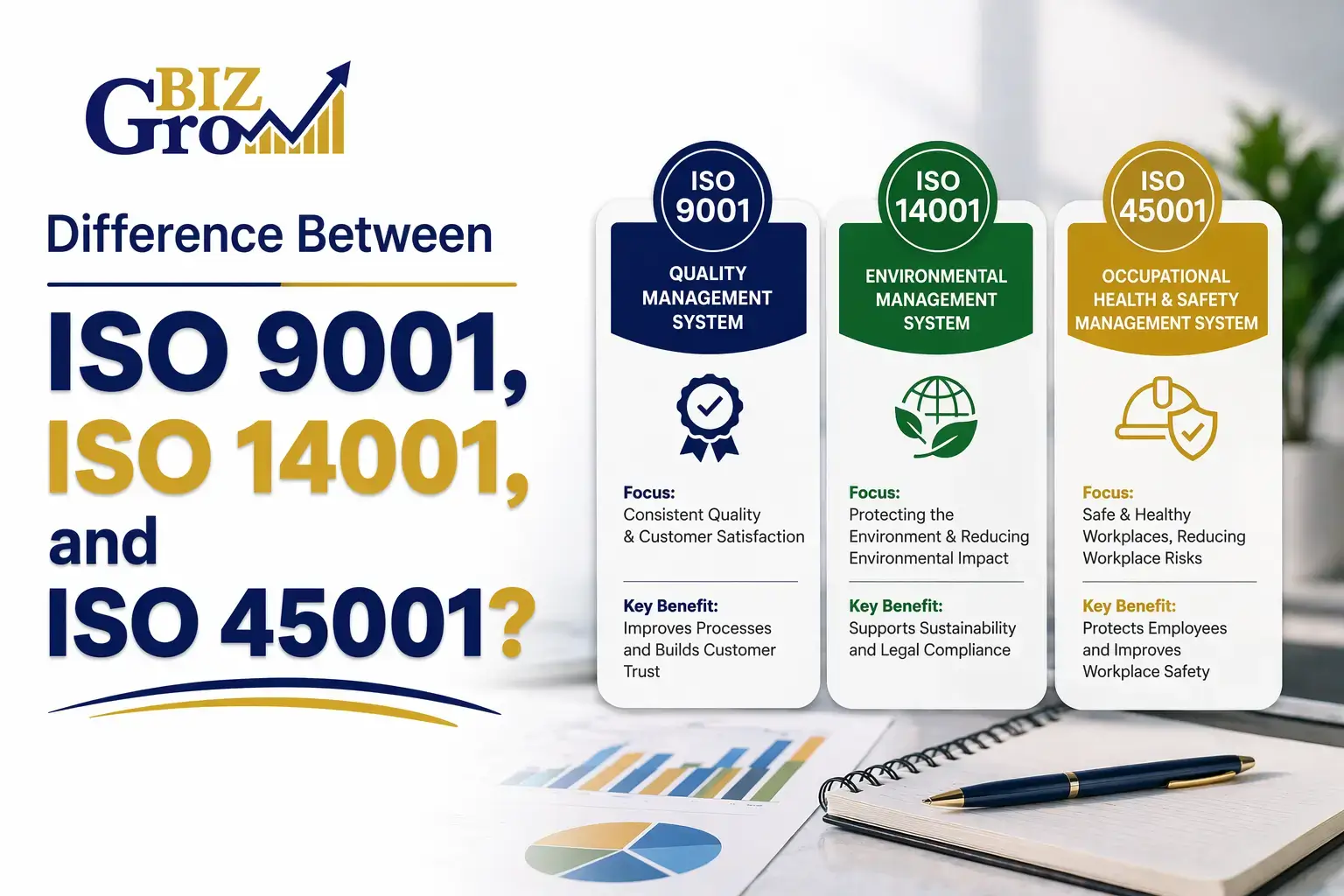
Yes, all three share the same structure. Because of this, you can join them into one system. It also cuts down on repeated work.