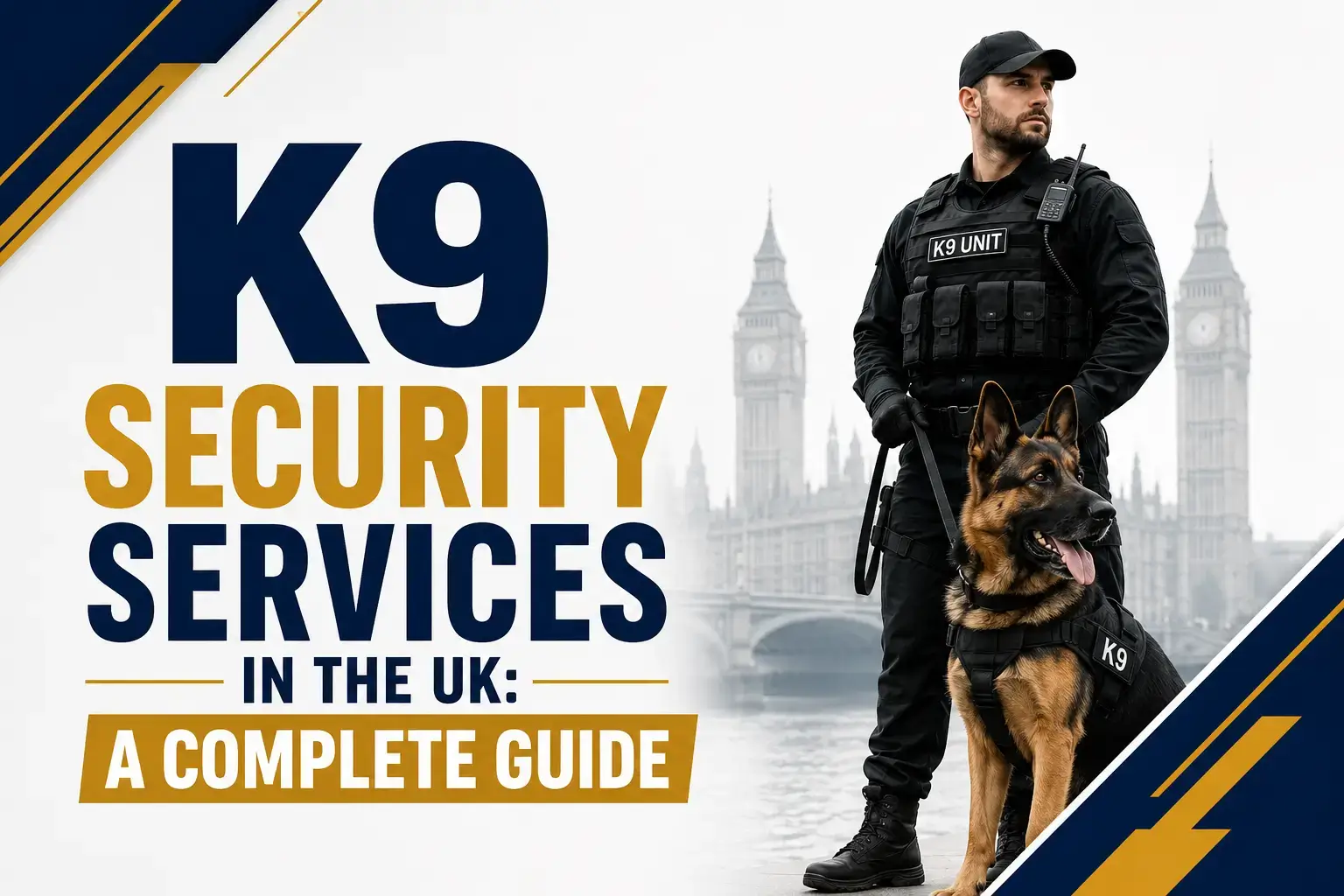
When people think of security, they usually picture guards, cameras, or alarm systems. But dogs have become one of the most effective tools in modern security work. K9 security services combine trained dogs with skilled handlers. Together, they protect people, property, and events across the UK. Dogs bring instincts and senses that technology simply can’t replicate. Because of this, more UK businesses now turn to K9 security services as part of their overall protection strategy. This guide explains exactly what these services involve. It covers how they work and why demand for them keeps growing.
What Are K9 Security Services in the UK?
K9 security services use specially trained dogs, paired with professional handlers, to provide an extra layer of protection. These dogs aren’t just guard dogs in the traditional sense. Many train for highly specific tasks, like detecting drugs, explosives, or intruders. A K9 team typically works as a unit, meaning the dog and handler train together. Because of this, K9 security differs significantly from simply having a dog on-site. Instead, it’s a structured, professional service built around specific security goals. In simple terms, K9 security covers:
- Deterrence through visible patrol dogs
- Detection of drugs, explosives, or other threats
- Tracking and searching for intruders
- Crowd management support at large events
Dogs bring senses and instincts humans simply don’t have. Because of this, K9 teams add a layer of security. It’s something technology and human guards alone can’t fully replicate.
How Do K9 Security Services Work in the UK?
K9 security teams work through close coordination. The dog and handler train together as one unit. Handlers go through extensive training. They learn to read behaviour cues. They direct the dog toward specific tasks. Dogs also train for months, based on their role. A general patrol dog trains differently from a detection dog. Each role needs different skills and instincts. Once deployed, K9 teams patrol sites continuously. Sometimes they screen people or areas for threats. Sometimes they simply act as a visible deterrent. A trained dog can screen large areas fast. Much faster than a manual search. This means K9 teams often replace the need for extra staff. Handlers also follow strict welfare rules. These protocols keep dogs safe and comfortable. Dogs get proper rest, care, and ongoing training throughout their working life.
Types of K9 Security Services
K9 security services aren’t a single offering. Different dogs specialise in different tasks, based on their training and natural abilities.
Guard Dog Patrols
Guard dog patrols involve dogs and handlers actively patrolling a site. They act as both a visible deterrent and a rapid response option. This helps if an intruder appears. These patrols work especially well for vacant properties, construction sites, and remote locations. A visible security presence often discourages trespassing. It stops vandalism before it even starts.
Explosive Detection Dogs
Explosive detection dogs identify explosive materials and precursors. They work across a wide range of environments, from transport hubs to public events. A trained dog can screen large crowds or areas within minutes. Because of this, these dogs play a critical role in counter-terrorism strategies. This matters especially at high-profile venues and events.
Event & Crowd Security Dogs
At large events like festivals and concerts, K9 teams help manage crowds, detect prohibited items, and act as a calming yet authoritative presence. Because dogs adapt well to different environments, they suit everything from busy festivals to smaller, more controlled venues.
Search & Tracking Dogs
Search and tracking dogs specialise in locating individuals, whether that’s tracking an intruder across a large site or assisting in broader security operations. Their ability to follow scent trails over long distances makes them uniquely effective in situations where visual searches alone would fall short.
Why Businesses in the UK Use K9 Security Services
Businesses across the UK increasingly turn to K9 security services because dogs offer capabilities that other security measures simply can’t match on their own.
- Strong visual deterrent: A visible security dog often discourages intruders before they even attempt anything
- Faster detection: Dogs can screen large areas or crowds far quicker than manual searches
- Enhanced threat detection: A dog’s sense of smell allows it to detect drugs, explosives, or contraband with remarkable accuracy
- Cost-effective coverage: A single K9 team can often cover ground that would otherwise require multiple static guards
- Adaptability: K9 teams work well across many environments, from remote sites to crowded public events
Because of these advantages, K9 security services have become a valuable addition to broader security strategies, rather than a replacement for other measures.
Which Industries Use K9 Security Services in the UK?
K9 security services support a wide range of industries across the UK, each with different needs. Because risk levels and site requirements vary so much between sectors, K9 providers rarely offer a single, generic package.
Events and Entertainment Venues
Events and entertainment venues rely heavily on K9 teams. They use them for crowd security, explosive detection, and drug detection. This happens often during festivals, concerts, and large gatherings. These venues deal with thousands of attendees at once. Because of this, K9 teams screen crowds far faster than manual searches ever could. They also act as a visible deterrent throughout the event.
Retail and Commercial Properties
Retail and commercial properties use guard dog patrols to deter theft and vandalism, especially for vacant or high-value sites. Since empty premises often attract opportunistic crime, a visible K9 presence discourages intruders before they even attempt to break in, reducing both risk and potential losses for property owners.
Transport Hubs
Transport hubs, including airports and stations, often depend on explosive and drug detection dogs. These dogs screen large volumes of people quickly and effectively. These locations handle constant footfall throughout the day. Because of this, detection dogs help security teams maintain safety. They do it without creating long delays or bottlenecks for passengers.
Construction Sites
Construction sites commonly use K9 patrols. They protect valuable equipment and materials during unoccupied hours. This matters most when the risk of trespassing or theft increases. Machinery and materials often sit exposed overnight. Because of this, a patrolling K9 team adds a strong layer of protection. It’s something static cameras alone can’t fully replace.
Educational Institutions
Educational institutions sometimes use drug detection dogs. This happens as part of broader safety measures. It’s particularly common for larger campuses. These environments prioritise student safety above all else. Because of this, detection dogs help identify potential issues early. They support a wider set of safeguarding measures already in place. Each industry faces different risks. So K9 providers typically tailor their services to match specific site requirements. They rarely offer a one-size-fits-all package.
Accreditations and Standards for K9 Security Providers
Not every K9 security provider operates to the same standard. Because of this, accreditation plays an important role. It helps you identify reliable, professional K9 security services.
- NASDU (National Association of Security Dog Users: Promotes high standards, proper training, and ongoing education across the private security dog sector.
- British Standard 8517-1 & 8517-2: Sets recognised standards. These cover general-purpose security dogs and detection dogs specifically.
- NCTAS-P (National Canine Training and Accreditation Scheme – Private Sector): A UK Government-backed scheme. It’s specifically for explosive detection dog teams, accredited by an approved police instructor.
- SIA Licensing: Many handlers also hold SIA licensing. This matters particularly when working in broader security roles alongside K9 duties.
Checking for these accreditations helps you confirm something important. It shows a K9 provider follows recognised training, welfare, and operational standards. This matters more than relying purely on marketing claims.
How to Find a K9 Security Company Near Me
Choosing the right provider comes down to matching their expertise to your specific needs.
- Identify what you actually need: General patrol deterrence, explosive detection, or drug detection all require different specialisms, so clarity here narrows your options quickly.
- Check their accreditation: Look for NASDU membership or NCTAS-P accreditation, particularly if you need explosive detection work.
- Ask about handler experience: Since a well-trained handler-dog team performs far more reliably, find out how long they’ve worked together and how the dogs get trained.
- Ask about dog welfare: Properly cared-for dogs perform more consistently over time, so it’s worth understanding how a company manages this.
- Consider industry experience: A provider familiar with your specific sector will likely understand your risks and requirements more thoroughly.
K9 security offers something no other measure fully replicates. Therefore, choosing an accredited, experienced provider ensures you get the protection you actually need.
How BizGrow Holdings Supports K9 Security Providers
At BizGrow Holdings, we help security companies across the UK, including K9 security providers, get accredited and stay compliant.
- Accreditation support: We guide you through SIA licensing, ISO 9001, and SafeContractor accreditation from start to finish
- Documentation handling: We prepare the paperwork accreditation bodies expect, so nothing gets missed
- Audit preparation: We help you get ready to pass on the first attempt
- Ongoing compliance: We support you as standards evolve over time
- Cost-effective guidance: Proper support often saves money in the long run, since it prevents delays and failed applications
Visit BizGrow Holdings to find out how we can help your K9 security business grow and win bigger contracts.
Frequently Asked Questions
1. Are K9 security dogs legal to use in the UK?
Yes, K9 security services are legal in the UK. Providers should follow recognised standards like NASDU and BS 8517. Checking for these gives you extra confidence in the service.
2. What training do K9 security dogs need?
Dogs undergo specialised training based on their role. This includes patrol work, detection tasks, or tracking, alongside handler training. The dog and handler usually train together as a unit.
3. How much does hiring K9 security services in the UK typically cost?
It depends on the type of service and duration needed. Getting a direct quote gives you the most accurate figure. Costs also vary based on the specific detection or patrol role required.
4. Can K9 security dogs work alongside human security guards?
Yes, K9 teams often work alongside guards, CCTV, and other measures for a stronger, layered security approach. This combination usually delivers far more reliable coverage overall.
5. What accreditation should a K9 security provider have?
Look for NASDU membership, BS 8517 compliance, and NCTAS-P accreditation for explosive detection specifically. These accreditations confirm the provider follows recognised training and welfare standards.
Conclusion
K9 security services bring something no other measure can fully replicate. A dog’s instinct, speed, and detection ability, paired with a trained handler, stand apart from any other option. From guard patrols to explosive detection, these services support a wide range of industries across the UK. Every site carries different risks. So choosing the right type of K9 service matters. Backed by proper accreditation, it makes a real difference. If you run a K9 security company, credibility matters too. Expert consultancy support can guide you through the accreditation process. This helps you win the confidence of bigger clients.