If you are a contractor or business owner in the UK, health and safety accreditation is no longer optional.
Clients want proof. Procurement teams need reassurance. And more and more tender opportunities now ask one simple question before anything else: Are you Alcumus SafeContractor approved?
Alcumus SafeContractor is an accreditation scheme that assesses the health and safety arrangements, policies, and qualifications of contractors. Many major clients recognise the scheme and accept the SafeContractor certificate as confirmation of competency in health and safety practice.
But what exactly does SafeContractor involve? What documents do you need? How do you apply? And how does it compare to CHAS or SMAS?
This guide covers everything clearly, in plain English, from start to finish.
At BizGrow Holdings, we help UK contractors and businesses navigate the SafeContractor process with confidence. Let us walk you through it.
What Is Alcumus SafeContractor?
Alcumus SafeContractor is one of the UK’s leading health and safety assessment schemes, designed to evaluate the health and safety procedures of contractors and service providers. It is used by thousands of organisations in the UK, including SMEs and FTSE 100 companies, across a broad range of industry sectors.
The scheme provides a robust and comprehensive assessment process that verifies an organisation’s commitment to workplace safety and compliance with current health and safety legislation.
In simple terms, SafeContractor is a third-party verification that your business meets recognised health and safety standards. When you pass the assessment, you receive a certificate. That certificate tells clients you have been independently checked and approved before they even let you on site.
Those companies meeting the high standard are included on a database, which is accessible to registered users only via a website. Client organisations that sign up to the scheme can access the database, enabling them to vet potential contractors before they even set foot on site. These clients agree that, as users of the scheme, they will engage only those who have received accreditation.
SafeContractor is the largest Safety Schemes in Procurement (SSIP) provider to hold UKAS accreditation. That is a significant distinction. UKAS is the United Kingdom Accreditation Service, the national body recognised by the UK Government to assess organisations that provide certification and inspection services. UKAS accreditation means SafeContractor itself has been independently assessed and meets the highest quality standards for its assessment process.
What Does Alcumus Do?
Alcumus is a risk management and compliance company based in Cardiff, Wales. It operates across several areas of business compliance, including health and safety, supply chain management, and workforce compliance.
SafeContractor is one of Alcumus’s core products. But Alcumus also operates:
- SafePQQ: an extended pre-qualification questionnaire covering areas beyond health and safety, including environmental management, quality, diversity and equality, financial standing, anti-bribery, and modern slavery
- SafeWorkforce: HR and health and safety support for SMEs
- Supply chain compliance: helping large organisations manage and verify their contractor supply chains
- ISO certification support: through its ISOQAR brand, Alcumus offers certification audits for ISO 9001, ISO 45001, ISO 27001, and more
SafeContractor delivers a SSIP and PAS91-aligned contractor accreditation, allowing suppliers to demonstrate that they meet the requirements around health and safety, equal opportunities, diversity, and environmental management practices.
This broader scope is one of SafeContractor’s key differentiators compared to other SSIP schemes. It goes beyond core health and safety to give clients a more comprehensive picture of a contractor’s overall compliance posture.
Is SafeContractor an SSIP Accreditation?
Yes. SafeContractor is a full member of the SSIP Safety Schemes in Procurement.
SSIP is an umbrella organisation endorsed by the Health and Safety Executive (HSE). It was created to standardise health and safety pre-qualification across UK industries and reduce the duplication burden for contractors who previously had to complete separate assessments for every client.
All SSIP member schemes assess contractors against the same 15 SSIP Core Criteria. Because the core criteria are shared, your SafeContractor certificate is recognised by other SSIP member schemes through the mutual recognition or “Deem to Satisfy” process.
In practice, this means:
- If you hold a valid SafeContractor certificate, you can use it to satisfy the SSIP health and safety requirements of CHAS, SMAS, Constructionline, and other SSIP members without repeating the full assessment
- One assessment, recognised across multiple client types
- Significant time and cost savings for contractors working with diverse client bases
Alcumus SafeContractor Ltd is a UKAS-accredited Type C Inspection body under ISO 17020:2012 covering the SSIP Core Criteria element of the SafeContractor Assessment Standard.
Who Needs SafeContractor Accreditation?
SafeContractor is suitable for any UK contractor or business that needs to demonstrate health and safety compliance to clients or principal contractors.
SafeContractor is particularly prevalent in facilities management, maintenance, and commercial services, though it has significant reach in construction. It is widely recognised in these sectors and is often the default requirement.
You should seriously consider SafeContractor if:
- Your clients or target clients are in facilities management, commercial fit-out, or maintenance
- You work with retail chains, commercial landlords, or property management companies
- Your clients require SSIP accreditation as a minimum for supply chain approval
- You want to reduce the administrative burden of repeated pre-qualification forms
- You are tendering for private sector contracts where SafeContractor is the preferred scheme
- Your competitors hold SafeContractor approval, and you do not
Over 450 major, nationwide businesses from several key sectors have signed up to use the scheme when selecting contractors. When that many buyers are using the portal to find and verify contractors, being on it is a genuine competitive advantage.
SafeContractor Requirements | What Documents Do You Need?
This is the section that most contractors need the most. Before you apply, you need to have certain documents in place. Here is what SafeContractor requires:
Health and Safety Policy
You must have a written, signed, and dated Health and Safety Policy. It must be relevant to your actual work activities, not a generic downloaded template.
The policy must be signed by the most senior person in your business and reviewed regularly. For businesses with five or more employees, a written policy is a legal requirement under the Health and Safety at Work Act 1974. For smaller businesses, it is still best practice and essential for accreditation.
Your policy must state your organisation’s commitment to health and safety, describe your arrangements for managing risks, and identify who is responsible for what.
Risk Assessments and Method Statements
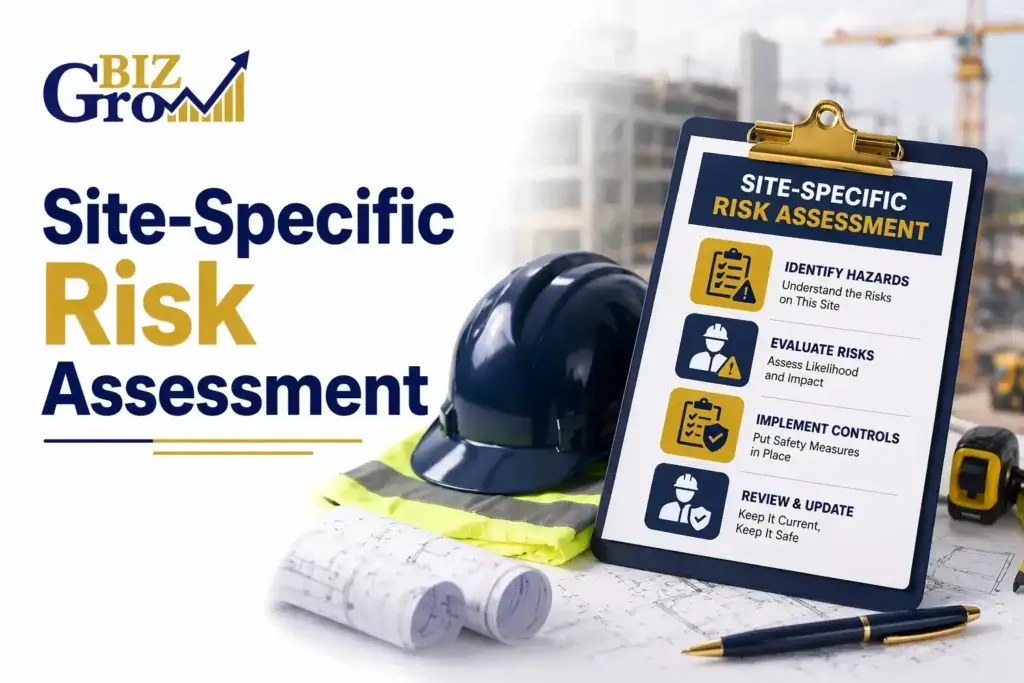
You need Risk Assessments and Method Statements (RAMS) that are specific and relevant to the work activities your business carries out.
Generic RAMS will not pass. Your assessments must identify the actual hazards involved in your work, assess the level of risk each presents, and describe the control measures you have in place to reduce those risks to an acceptable level.
If you carry out multiple types of work, you need RAMS for each significant activity. Assessors will check that your documentation is proportionate and relevant to the scope of work you have declared.
Insurance Certificates
You must hold valid Employer’s Liability Insurance (minimum £5 million) and Public Liability Insurance. Both certificates must be current; expired insurance is an automatic failure.
Make sure your certificates clearly show your company name, the level of cover, and the expiry date. If your insurance is due for renewal close to your application date, renew it first.
Training and Competence Records
You need to demonstrate that your staff are competent to carry out the work safely. This includes:
- Training certificates relevant to your trade, CSCS cards, IPAF, PASMA, asbestos awareness, etc.
- Evidence of health and safety awareness training
- Records of toolbox talks and site briefings
- Any specific licence or qualification required for your work activities
- Records showing training have been refreshed as required
The keyword is evidence. Saying your staff are trained is not enough; you need records that prove it.
Accident and Incident History
SafeContractor requires you to provide three years of accident and incident history. This covers accidents, near misses, and dangerous occurrences.
If you have had no reportable accidents in three years, that is positive, but you still need to demonstrate that you have an active system for recording and investigating incidents. A blank record with no system behind it raises questions. An active system with no incidents to report is reassuring.
Additional Documents for Higher Risk Work
If your business carries out higher-risk activities, additional documentation may be required. This can include:
- COSHH assessments for businesses that work with hazardous substances
- Asbestos awareness training records for construction and refurbishment work
- Noise and vibration assessments for relevant trades
- Electrical or gas safe registration, where applicable
- Working at height risk assessments and equipment inspection records
- Lone worker procedures where staff work in isolation
- Environmental management procedures, particularly for the SafePQQ extended assessment
Some of the above documentation may not apply to your business. If you do not hold some of the above requirements, guidance documentation can be provided to ensure that you are able to work towards achieving accredited status.
Benefits of Recognised Contractor Compliance Schemes
Why bother with SafeContractor at all? Here are the practical, real-world benefits:
Win more contracts.
Many principal contractors, FM companies, and large clients require SafeContractor as part of their onboarding and procurement process. Being approved removes a barrier that currently blocks you from their supplier lists.
Save time on pre-qualification.
Rather than completing bespoke health and safety questionnaires for every client, your SafeContractor certificate can often serve as a verified pre-qualification, saving time and reducing administrative burden.
SSIP mutual recognition.
Your SafeContractor certificate is recognised by other SSIP schemes through Deem to Satisfy. One assessment is accepted in many places.
Appear on the client portal.
Once accredited, contractors are listed on the SafeContractor portal, where clients actively search for approved contractors. This gives you direct visibility to buyers who are actively looking for compliant suppliers.
Improve your internal health and safety.
The accreditation process forces you to review and formalise your H&S systems. Most businesses come out of it with stronger documentation, better processes, and a more safety-conscious culture.
Demonstrate professionalism.
The accreditation will enhance your ability to win new contracts. Your commitment to safety will be viewed positively by insurers when the company liability policy is up for renewal.
Satisfy insurance requirements.
Many commercial insurers look favourably on businesses that hold recognised health and safety accreditations. It demonstrates that you take risk management seriously.
SafeContractor is a comprehensive scheme that covers not just health and safety, but also diversity, equal opportunities, and environmental risk management. This broader scope makes it more valuable than a basic H&S-only certification for clients who want fuller assurance.
How to Apply for Alcumus SafeContractor | Step by Step
Step 1 | Gather your documents.
Before you do anything else, pull together all your documentation: H&S policy, RAMS, insurance certificates, training records, and accident history. Having everything ready before you start prevents delays mid-application.
Step 2 | Register on the SafeContractor portal.
Visit the SafeContractor website and create an account. Enter your company details, business name, trade categories, number of employees, and the type of work you carry out. You will be asked to select the activity categories that apply to your business, and be accurate, as the assessment questions will be tailored to your declared activities.
Step 3 | Complete the online assessment.
Work through the assessment questionnaire, answering questions about your health and safety management, policies, procedures, training, insurance, and incident history. The assessment is tailored to your business size and the activities you have declared.
Step 4 | Upload your evidence.
Upload your supporting documents directly to the portal. Make sure everything is clearly labelled and easy to review. Well-organised evidence makes the assessor’s job easier and tends to speed up the process.
Step 5 | Assessor review.
An Alcumus auditor reviews your documents and may request additional evidence, known as a “further information request.” If they need clarification or additional documentation, respond promptly and accurately.
Step 6 | Approval and certificate.
Once the assessor is satisfied, your application is approved. You receive your SafeContractor certificate, valid for 12 months and are listed on the SafeContractor portal.
How Long Does SafeContractor Take?
The timeline depends entirely on how prepared your documents are when you apply:
- Well-prepared businesses with all documents ready: as little as a few working days
- Typical timeline for most applicants: 1 to 2 weeks
- If a further information request is raised, add 1 to 2 weeks for the additional exchange
Preparation is the single biggest factor. Businesses that start with complete, current, and well-organised documentation get through quickly. Those who start without everything in place or with outdated documents spend longer going back and forth.
At BizGrow Holdings, we review your documents before you apply. That means when you submit, you submit with confidence and get your certificate faster.
SafeContractor vs CHAS vs SMAS | Key Differences
All three are SSIP member schemes. All three assess the same core health and safety criteria. So how do you choose?
SafeContractor is the default choice for facilities management, commercial maintenance, and private sector clients. SafeContractor also delves into other areas such as environmental management, quality management, equal opportunities, financial stability, anti-bribery, and modern slavery, making it a more comprehensive assessment of a business’s overall management systems. It has a strong presence in commercial property management and retail supply chains.
CHAS is the UK’s most widely recognised SSIP scheme overall, with over 70,000 registered contractors. It is the strongest choice for public sector, local authority, and NHS contracts. CHAS also offers higher tiers, including the Common Assessment Standard, for businesses targeting public sector frameworks.
SMAS specialises in construction, housebuilding, education, and social care. It is known for fast turnaround, sometimes within 24 to 48 hours and is popular with residential developers and their supply chains.
Rather than simply comparing them, it is important to keep in mind that any scheme to improve your standards will have benefits for your business overall. Many contractors have multiple SSIP accreditations, and there are no disadvantages to having both.
The practical advice:
- Check what your current and target clients specifically require
- If you work in facilities management, maintenance, or commercial fit-out, SafeContractor is widely recognised in these sectors and is often the default requirement.
- If you target public sector work primarily, start with CHAS
- If your clients are housebuilders or social care providers, consider SMAS
- Use SSIP mutual recognition to satisfy multiple schemes from a single assessment
How to Access the Alcumus SafeContractor Login Portal
Managing your SafeContractor accreditation is done through the online portal at safecontractor.com.
Once registered, you can manage everything from your SafeContractor portal. Go to the official SafeContractor website and click “Login” at the top right. Use the credentials you created during registration.
Through the portal, you can:
- Submit and track your accreditation application
- Upload and update your documents
- View your certificate and approval status
- Respond to further information requests from assessors
- Access your renewal application when your certificate is due to expire
- Access member benefits and resources
Keep your login credentials secure and make sure the person managing your SafeContractor account is aware of your renewal date. Letting your certificate lapse means you lose your listed status on the portal and your ability to present a valid certificate to clients.
If you are using SafePQQ for extended PQQ compliance, access it through the same portal.
How to Renew Your SafeContractor Accreditation
SafeContractor certification is valid for 12 months. You must renew annually to keep your listing on the portal and maintain your approved status.
The renewal process follows the same steps as your initial application, but it is faster because your company details are already in the system.
Key renewal tips:
- Start your renewal at least 4 weeks before your certificate expires
- Update your Health and Safety Policy if it has not been reviewed in the past 12 months
- Ensure your insurance certificates are renewed and current before submitting
- Check that your training records are up to date for all current staff
- Update your RAMS if your work activities have changed since your last assessment
- Keep your accident and incident records current throughout the year, not just at renewal time
If your certificate lapses, you lose your approved status on the portal immediately. Clients who search for you will not see a valid certificate, which can create problems mid-contract. Treat renewal as a diary commitment, not something to sort out when someone asks.
How BizGrow Holdings Helps You Get SafeContractor Approved
Getting Alcumus SafeContractor accreditation right requires proper preparation. Many contractors submit applications with incomplete documentation, outdated policies, or RAMS that are too generic, and end up with further information requests that delay their approval by weeks.
BizGrow Holdings provides end-to-end support for UK contractors and businesses pursuing SafeContractor accreditation. We know exactly what Alcumus assessors look for, and we make sure your application is complete, accurate, and ready to pass before you submit it.
Here is what we do:
- Document review: We check your Health and Safety Policy, RAMS, insurance, and training records against SafeContractor requirements before you apply
- Gap analysis: we identify exactly what is missing or needs updating
- Policy and RAMS development: we help you create or improve documents that meet the assessment standard
- Application support: We guide you through the SafeContractor portal and help you complete the questionnaire accurately
- Evidence organisation: We help you present your supporting documents clearly and professionally
- Multi-scheme planning: we advise on whether SafeContractor, CHAS, SMAS, or a combination is right for your business and clients
- Renewal management: we help you stay on top of annual renewal so your certificate never lapses
We have helped contractors across construction, facilities management, cleaning, maintenance, electrical, landscaping, and security services achieve SafeContractor accreditation, many of them in days, for the first time.
If you want to get SafeContractor approved without delays or uncertainty, the BizGrow Holdings team is ready to help. Visit bizgrow-holdings.com to get started today.
Conclusion | Get SafeContractor Certified With Confidence
Alcumus SafeContractor accreditation is one of the most practical investments a UK contractor can make.
It removes the barrier to tenders you cannot currently access & saves you time on pre-qualification. It gives clients the assurance they need to choose you. And it drives real improvements in your health and safety systems.
In 2026, the number of clients and principal contractors requiring SafeContractor or an equivalent SSIP accreditation as a minimum condition for supply chain approval continues to grow. Contractors without accreditation are increasingly being filtered out before they even get to discuss the work.
Do not let that happen to your business.
Start by gathering your documents. Review your policies. And when you are ready, speak to the team at BizGrow Holdings. We will help you get SafeContractor approved properly and with confidence.
Visit bizgrow-holdings.com today.
FAQs About Alcumus SafeContractor in the UK
1. What is Alcumus SafeContractor?
Alcumus SafeContractor is a UK health and safety accreditation scheme that independently assesses contractors’ safety systems, policies, and documentation. Approved contractors are listed on a portal used by thousands of UK clients to find and verify compliant suppliers.
2. How much does Alcumus SafeContractor cost?
The investment varies depending on your business size and the level of assessment required. Visit bizgrow-holdings.com or safecontractor.com for current information and speak to BizGrow Holdings for guidance on the most cost-effective accreditation route for your business.
3. Is SafeContractor the same as SSIP?
SafeContractor is a member of the SSIP Safety Schemes in Procurement. This means your SafeContractor certificate is recognised by other SSIP member schemes, including CHAS and SMAS, through the Deem to Satisfy mutual recognition process.
4. How long is SafeContractor accreditation valid?
SafeContractor accreditation is valid for 12 months. You must renew annually to maintain your portal listing and keep your certificate current for client and tender requirements.
5. Can sole traders apply for SafeContractor?
Yes. SafeContractor is open to businesses of any size, including sole traders and self-employed contractors. The assessment is scaled to your business; you are only assessed on what is relevant to your size and type of work.