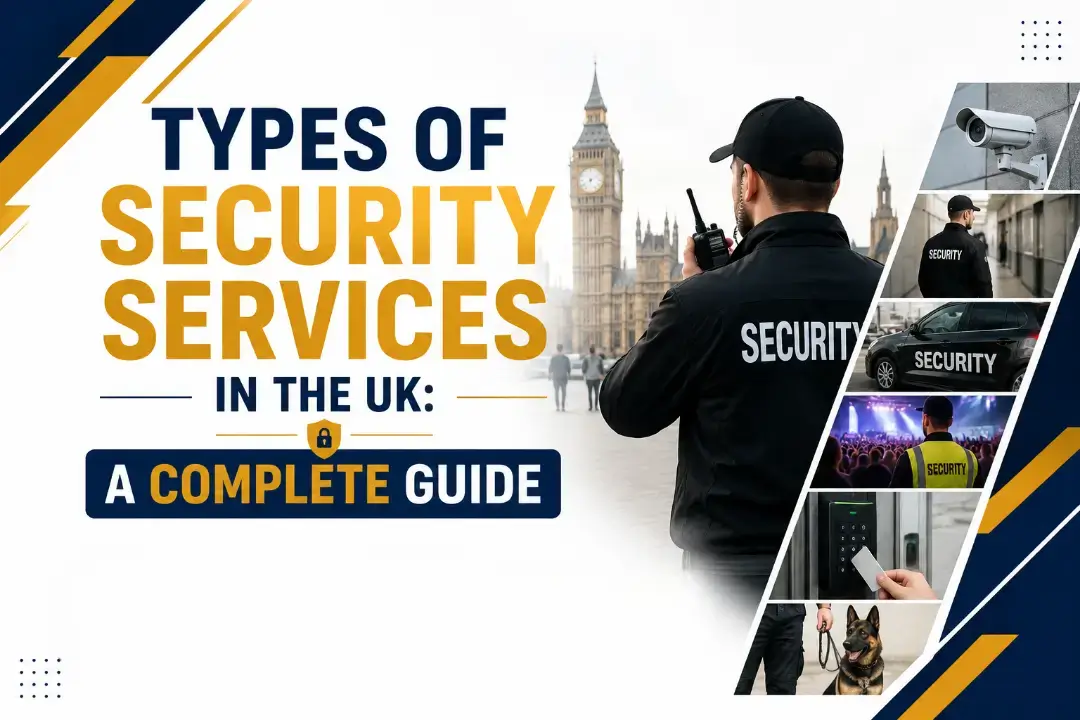
Every business faces some level of risk. Unauthorised access, damage, and safety incidents can happen at any time. That’s why more UK businesses now invest in professional security services. But security isn’t one-size-fits-all. Different businesses need different types of protection, since a small office and a busy construction site face completely different risks. Because of this, choosing the wrong type of security can leave real gaps, even when a business genuinely tries to stay safe. Therefore, understanding your options matters just as much as taking action. This guide breaks down the main types of security services in the UK, so you can choose the right one for your business, whatever your industry, site size, or risk level might be.
What Are Security Services?
Security services in the UK are professional solutions that protect people, property, and assets. They include everything from physical guards to CCTV systems and access control. Businesses use these services to reduce risk, prevent unauthorised access, and keep staff and customers safe. Most providers combine trained manpower with technology, since a mix usually works far better than relying on just one method alone. In simple terms, security services cover:
- Physical protection through trained, on-site guards
- Technology-based monitoring, such as CCTV and alarm systems
- Access management systems that control entry to a site
- Emergency response support for fast, reliable action when needed
Because no single method covers every risk, most businesses end up combining more than one of these to build a stronger, layered system. This way, if one measure misses something, another one usually catches it, which keeps the overall setup far more reliable.
Why Businesses in the UK Need Security Services
Risk doesn’t stay the same everywhere. Some sites need more protection than others, depending on location, industry, and the value of what’s inside. A visible security presence puts off most risks before they even happen, which is why manned guarding and CCTV work so well together. Beyond that, proper security also protects staff and customers, since it creates a safer environment for everyone on-site.
Security matters for practical business reasons too. It reduces liability risk, since well-managed sites see fewer costly incidents. Many contracts and insurance policies now expect proper security measures before they’ll even engage with a business. On top of that, clients and visitors simply feel more comfortable visiting premises that are clearly well protected. Because risks vary so much by industry, most businesses choose a security setup tailored specifically to their site and daily operations, rather than picking a generic package.
Main Types of Security Services in the UK
There isn’t just one type of security service in the UK. UK businesses can choose different types of security services from several options, and many combine two or three together for stronger, more complete protection. Because every site faces different risks, the right combination depends on factors like location, industry, and daily operations. As a result, businesses often build a layered approach, rather than relying on a single solution to cover every situation.
Manned Guarding
Manned guarding means placing trained security officers on-site. These guards act as both a visible deterrent and a fast response team whenever something goes wrong. Guards can stay static at one point, like a reception desk or gate, or they can patrol the site regularly. Many businesses use a mix of both approaches. Because a visible guard puts off most opportunistic risk before it even starts, and since guards stay physically present, they can respond the moment an incident happens rather than reacting after the fact. As a result, manned guarding remains a common choice across offices, warehouses, retail units, and construction sites.
CCTV & Surveillance Monitoring
CCTV systems let businesses monitor their premises around the clock. Modern systems often include motion sensors and remote viewing, so teams can check footage from anywhere. This type of security works especially well alongside manned guarding, since guards can respond quickly to anything the cameras pick up. Because cameras never stop watching, even overnight, the footage they capture often becomes useful evidence whenever an investigation comes up. Additionally, many larger businesses use CCTV to monitor several sites remotely from a single control room.
Mobile Patrol Services
Mobile patrols involve security officers who move between multiple sites, rather than staying fixed in one location. This makes them a cost-effective option for businesses that don’t need a guard on-site all day long. Because one patrol officer can check several sites in a single shift, businesses gain wider coverage without paying for constant, fixed presence. Furthermore, random patrol timing makes it harder for anyone to predict when a guard might show up, which adds an extra layer of unpredictability that works in the business’s favour.
Alarm Response Services
Alarm response teams react the moment an alarm triggers. Rather than relying purely on police response times, businesses use dedicated teams that can reach the site quickly and assess the situation firsthand. These teams verify incidents before they escalate further, which helps reduce false alarm callouts and unnecessary panic. When paired with an existing alarm system, this service adds a fast, reliable extra layer of protection.
Access Control Systems
Access control manages who can enter a building or specific areas within it. This might include key cards, biometric scanners, or coded entry systems, depending on how tight the security needs to be. By limiting entry to approved people only, businesses significantly reduce the risk of unauthorised access. Most systems also track movement, so businesses can see exactly who entered a space and when. As a result, this works especially well in offices and other restricted facilities where accountability matters most.
Key Holding Services
Key holding means a security company safely stores your building keys and responds to emergencies on your behalf, even outside normal working hours. This removes the personal responsibility of rushing to your site at odd hours, since a trained responder can enter quickly whenever something goes wrong. Because of this, key holding often pairs with alarm response services, since both work together to provide fast, reliable emergency access whenever it’s needed.
Door Supervision
Door supervisors manage entry at venues like pubs, clubs, and events. They check IDs, manage crowd behaviour, and maintain order at the entrance throughout the night. Because they train specifically to de-escalate conflict calmly, door supervisors keep venues secure without unnecessary confrontation. Additionally, anyone working in this role legally needs an SIA licence, which ensures they meet proper training and conduct standards.
Event & Retail Security
Event security focuses on crowd safety at concerts, festivals, and conferences. Retail security, on the other hand, focuses on protecting stock and keeping stores safe for both staff and shoppers. Event security teams help manage large crowds so events run safely and smoothly from start to finish. Meanwhile, retail security teams, through store detectives and loss prevention officers, help cut losses while also improving the overall shopping experience through a visible, professional presence.
How to Choose the Right Type of Security Service
With so many options available, choosing the right type of security service in the UK can feel overwhelming at first. The right choice really depends on your site, your risk level, and how your business operates day to day.
- Site size and layout: Larger sites often need mobile patrols or multiple guards, since a single fixed post usually can’t cover everything
- Type of business: Retail, construction, and office environments all face very different risks, so the setup should match the industry
- Hours of operation: Businesses running 24/7 usually need round-the-clock coverage, whereas daytime-only businesses can often manage with less
- Budget and priorities: Many businesses combine technology with manpower, since this mix often delivers balanced, cost-effective protection
- Compliance needs: Certain industries require specific accreditation before they can even hire a provider, so it pays to check this early.
Most businesses don’t get everything right from day one. Instead, they start with one service and add more as their needs grow over time.
Accreditations That Prove a Security Company Is Reliable
Not every type of security company operates to the same standard. Accreditation helps you tell the difference between a reliable provider and a risky one, before you commit to a contract.
- SIA Licence: Look for this first, since it’s a legal requirement for anyone working in security in the UK
- ACS (Approved Contractor Scheme): This shows a company consistently meets high industry standards, not just a one-off checklist
- ISO 9001: This confirms the company runs strong quality management systems across its operations
- SafeContractor: This proves the company follows proper health and safety practices, which matters just as much as the service itself
Accreditation isn’t just paperwork sitting in a drawer. Instead, it shows a company genuinely takes safety, training, and quality seriously, which matters far more once you’re relying on them to protect your business.
How BizGrow Holdings Supports Security Companies
At BizGrow Holdings, we help security companies across the UK get accredited and stay compliant. Whether you need ACS, ISO 9001, or SafeContractor accreditation, our team guides you through the entire process from start to finish. We handle the documentation accreditation bodies expect, so nothing gets missed or delayed. We also prepare you for audits, helping you pass on the first attempt rather than facing costly resubmissions.
As regulations and standards change over time, BizGrow Holdings stays with you to keep your compliance up to date and helps guide your growth so proper accreditation translates into bigger, better contracts. Many companies ask about cost before they even start the process. The truth is, working with the right consultancy often saves far more money in the long run, since it prevents delays and failed applications.
Frequently Asked Questions
1. What is the most common type of Security service in the UK?
Manned guarding remains one of the most common types of security services. Many businesses combine it with CCTV for full protection.
2. Do UK security guards need a licence to work?
Yes, security guards must hold an SIA licence. This ensures they meet proper training standards.
3. What’s the difference between manned guarding and mobile patrols?
Manned guarding places guards at a fixed location. Mobile patrols move between multiple sites during a shift.
4. How much does hiring a security service typically cost?
It depends on the type of service and site size. Getting expert advice helps you choose the most cost-effective option.
5. What accreditation should I look for when choosing a security company?
Look for SIA, ACS, ISO 9001, and SafeContractor accreditation. These show the company meets proper safety and quality standards.
Conclusion
Security isn’t something UK businesses can afford to overlook. From manned guarding to CCTV and access control, choosing the right mix of services keeps your business safe and compliant. Because every site carries different risks, the right combination often makes the biggest difference between adequate protection and real peace of mind. Therefore, taking the time to assess your needs properly, rather than settling for a generic package, pays off in the long run. If you run a security company and want to strengthen your credibility through proper accreditation, expert consultancy support can guide you through the entire process. This way, you can build a safer, more compliant business while also winning the trust of clients who expect nothing less.