If you work in construction or are planning a construction project, you have probably heard the term method statement. But what exactly is it? Why is it so important? And how do you write one? In this article, we will explain everything you need to know about method statements in the construction industry in simple, easy-to-understand words.
What is a Method Statement in Construction?
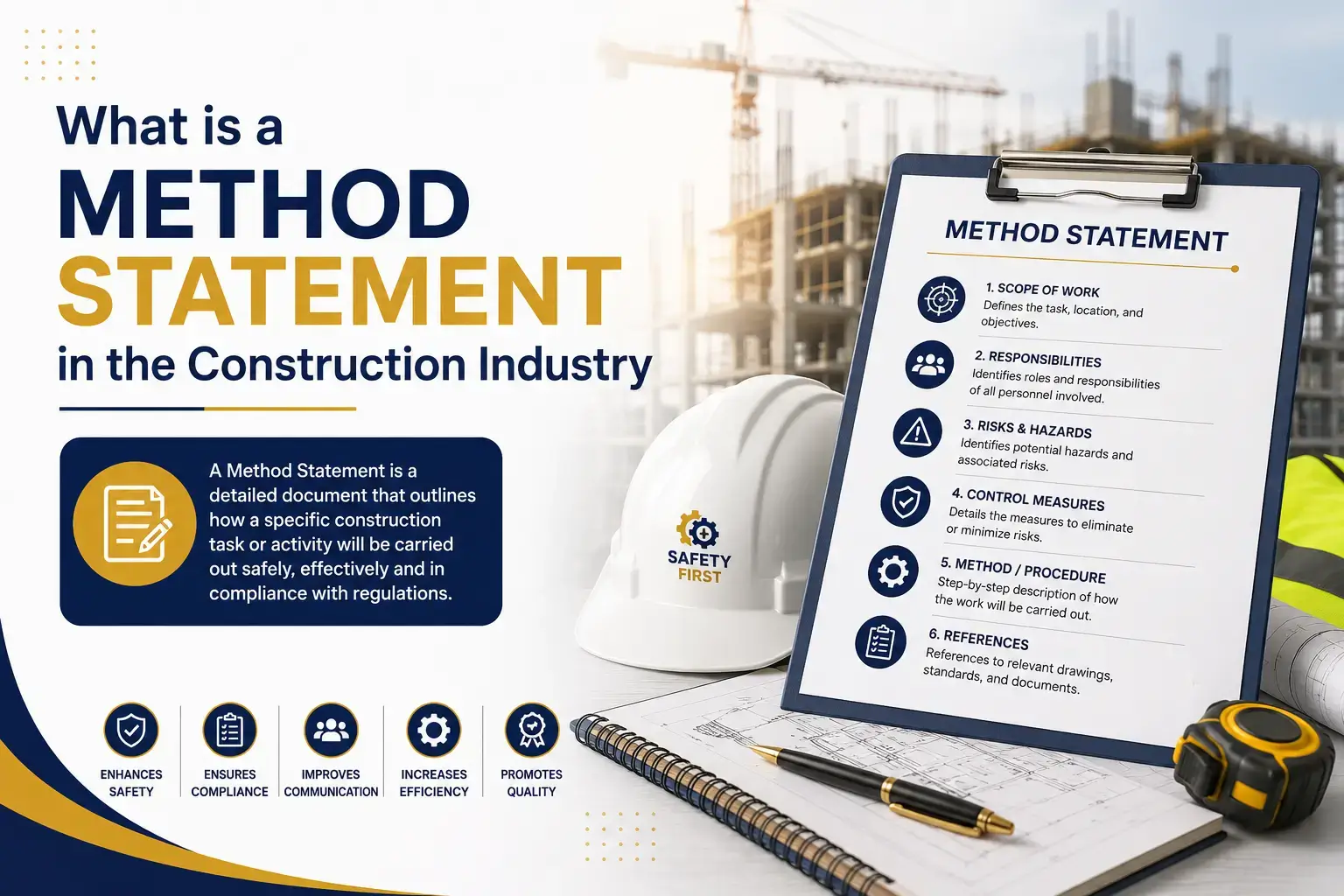
A method statement is a document that explains, step by step, how a specific task or job will be done on a construction site. It describes the process, the tools and materials needed, and most importantly, how workers will stay safe while doing the job.
Think of it as a detailed plan or instruction guide. Before any risky or complex work starts on a construction site, a method statement is prepared. It tells everyone involved, from site managers to workers, exactly what will happen, in what order, and how risks will be controlled.
Method statements are also known as Safe Work Method Statements (SWMS) or Safe Systems of Work (SSoW). They are usually used alongside a Risk Assessment to make sure all possible dangers have been identified and managed before the work begins.
Why is a Method Statement Important?
Method statements are not just paperwork. They are a very important part of health and safety management on a construction site. Here is why they matter so much:
First, they help prevent accidents. By planning a job and thinking through every step, workers are less likely to make mistakes or get hurt. A method statement forces people to think about what could go wrong before it actually does.
Second, they are often a legal requirement. In many countries, including the UK, construction companies are required by law to have written method statements for high-risk activities. This is part of the Construction (Design and Management) Regulations 2015 (CDM 2015). Lack of proper documentation can result in heavy fines or even the shutdown of a project.
Third, they protect your business. If an accident does happen on site, a proper method statement shows that the company took reasonable steps to keep workers safe. This can be very important for insurance claims and legal proceedings.
Fourth, they improve communication. A good method statement makes sure that everyone on the team knows exactly what they need to do. This reduces confusion, saves time, and helps the job run smoothly.
When Do You Need a Method Statement?
Not every single construction task needs a full method statement, but any work that carries significant risk should have one. Common situations where a method statement is required include:
Working at heights, such as scaffolding, roofing, or using ladders and elevated work platforms. Demolition work, where the risk of structural collapse or falling debris is high. Excavation and digging, especially when working near underground pipes or cables. Working with heavy machinery like cranes, excavators, or forklifts. Electrical work, especially in live environments. Work near water, roads, or railways. Handling hazardous materials such as asbestos, chemicals, or dust.
In short, if there is a significant risk of injury or damage, a method statement should be written before work begins.
What Should a Method Statement Include?
A good method statement should cover all the key details of the job. While every method statement may look a little different depending on the task, most of them include the following sections:
Project and Task Description: This section gives basic information such as the project name, location, the name of the company, and a clear description of the task being carried out.
Personnel and Responsibilities: Who will be doing the work? What are their roles and qualifications? This section lists the team members and makes clear who is responsible for what.
Plant, Equipment, and Materials: A list of all the tools, machinery, and materials that will be used. This includes safety equipment such as hard hats, gloves, harnesses, and any specialist gear.
Step-by-Step Work Process: This is the heart of the method statement. It explains, in order, exactly how the work will be carried out. Each step should be clear and easy to understand, even for someone who has never done the job before.
Risk Assessment and Control Measures: What are the main hazards? How will they be controlled? This section works hand in hand with a Risk Assessment. For each hazard identified, there should be a clear control measure to reduce or eliminate the risk.
Emergency Procedures: What happens if something goes wrong? This section outlines what workers should do in an emergency, such as a fire, an injury, or a structural collapse. It should include emergency contact numbers and the location of first aid kits and fire exits.
Environmental Considerations: Construction sites can have a big impact on the environment. This section covers how the team will manage things like waste disposal, noise, dust, and pollution.
Sign-Off Section: Before work begins, everyone involved should read and sign the method statement. This confirms that they understand the process and the safety rules.
Method Statement vs Risk Assessment: What is the Difference?
Many people confuse method statements with risk assessments, and while they are closely linked, they are not the same thing.
A Risk Assessment identifies what could go wrong and how serious the consequences might be. It focuses on spotting hazards and evaluating their level of risk. A Method Statement explains how the work will actually be done and how the risks identified in the risk assessment will be controlled.
In construction, the two documents are often combined into a single document called a RAMS Risk Assessment and Method Statement. This is especially common in the UK construction industry.
How to Write a Method Statement for Construction Work
Writing a method statement does not have to be complicated. Here are some simple steps to help you create an effective one:
Step 1
Understand the task: Before you write anything, make sure you fully understand the job that needs to be done. Talk to the team, visit the site, and identify any challenges or hazards.
Step 2
Identify the hazards: Think about what could go wrong during each stage of the work. Consider physical hazards like falling objects, health hazards like dust or fumes, and environmental hazards.
Step 3
Describe the work process step by step: Write out the work process in a clear, logical order. Use simple language that everyone can understand. Avoid technical jargon where possible.
Step 4
List control measures: For each hazard, write down exactly how it will be controlled. For example, if there is a risk of falling from height, the control measure might be to install guardrails and use a harness.
Step 5
Review and approve: Before the document is used, it should be reviewed by a qualified person, such as a health and safety manager or a site supervisor. Once approved, make sure all workers on the team read and sign it.
Step 6
Keep it updated: A method statement is not a one-time document. If the scope of work changes or new hazards are discovered, the document should be updated right away.
Who is Responsible for Creating a Method Statement?
In most construction projects, the responsibility for creating a method statement falls on the contractor or subcontractor carrying out the work. This is usually done by a site manager, health and safety officer, or a senior member of the team with the right experience and qualifications.
On larger projects, the principal contractor may require all subcontractors to submit method statements before they are allowed to start work on site. This is an important part of managing health and safety across a complex project.
Common Mistakes to Avoid When Writing a Method Statement
Even experienced construction professionals sometimes make mistakes when writing method statements. Here are some of the most common ones to watch out for. Using too much technical language can make the document hard to understand for workers on the ground. Keep the language simple and clear. Being too vague is another common issue; saying things like ‘workers will take appropriate precautions’ is not good enough. Be specific about what precautions will be taken and how.
Copying and pasting from another project’s method statement without adapting it to the current job is dangerous. Every project and every task is different. Forgetting to update the document when things change is a serious mistake. A method statement that no longer reflects the actual work being done is worse than useless.
Finally, not getting workers to sign the document means there is no proof they have read and understood it.
Final Thoughts
A method statement is one of the most important documents in the construction industry. It keeps workers safe, helps projects run smoothly, and shows that your company takes health and safety seriously. Whether you are a small subcontractor or a large principal contractor, taking the time to write a proper method statement is always worth it.
At BizGrow Holdings, we understand the importance of proper planning and documentation in the construction industry. If you need help with your construction project management, health and safety compliance, or any other business needs, our team is ready to help. Visit us at bizgrow-holdings to learn more about how we can support your business.