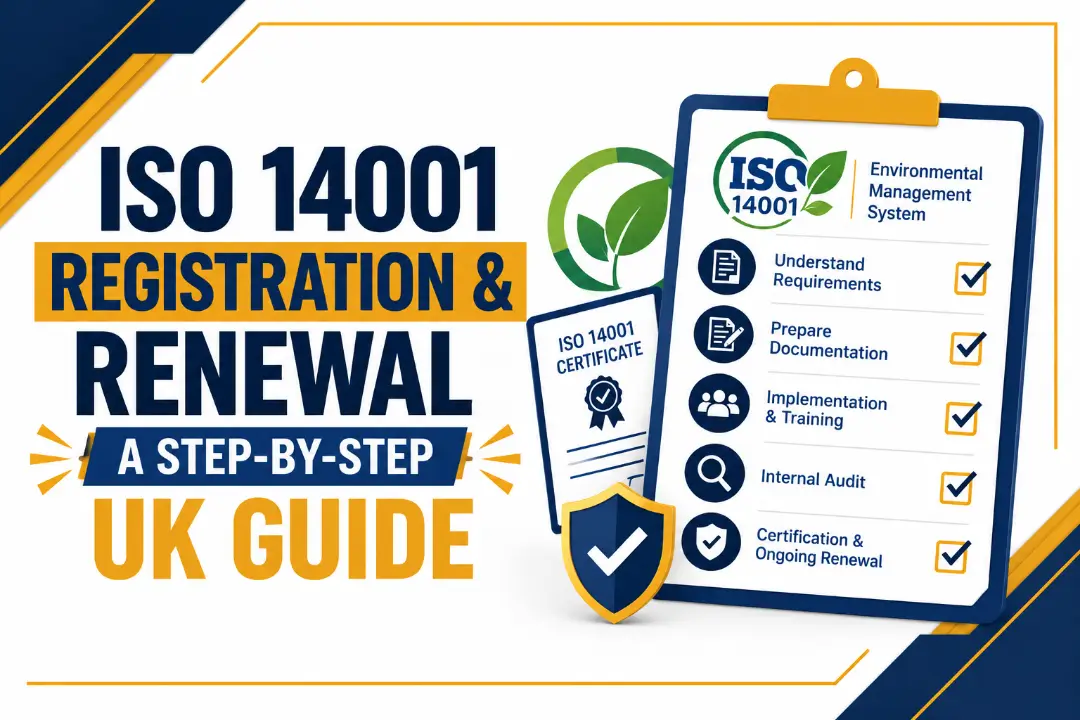
Environmental responsibility matters more than ever for UK businesses. Clients, regulators, and even employees expect companies to manage their environmental impact properly. Therefore, ISO 14001 registration helps prove exactly that. This guide walks you through the entire ISO 14001 registration and renewal process in simple words. Specifically, it covers what documents you need, how the assessment works, and what happens when it’s time to renew. Moreover, whether you’re applying for ISO 14001 registration for the first time or preparing for renewal, this guide will help you understand each step clearly, without any unnecessary jargon along the way.
What Is ISO 14001 Registration
ISO 14001 is an internationally recognised standard for environmental management systems. Essentially, ISO 14001 registration means your business has built a structured system to manage, monitor, and reduce its environmental impact. However, getting registered isn’t just about ticking boxes. Instead, it shows clients, regulators, and stakeholders that your business genuinely takes environmental responsibility seriously. Furthermore, ISO 14001 registration helps you spot risks early, before they turn into bigger problems. As a result, your business runs more efficiently, while also building trust with everyone who works with you, from clients to suppliers.
Who Needs ISO 14001 in the UK
Many industries benefit from ISO 14001 registration, especially those where businesses closely monitor their environmental impact. In fact, some sectors face growing pressure from clients, regulators, and even the public to demonstrate real environmental responsibility, not just written promises.
Businesses that commonly need ISO 14001 registration include:
- Construction and civil engineering companies
- Manufacturing and production businesses
- Facilities management providers
- Companies bidding for public sector contracts
- Businesses with supply chain sustainability requirements
If your clients ask about environmental policies during tenders, ISO 14001 registration often answers those questions instantly. Having this certification ready can save time and effort during the bidding process, rather than scrambling to prove compliance under pressure. Ultimately, whether you work in construction, manufacturing, or facilities management, ISO 14001 registration strengthens your credibility and opens doors to more opportunities across competitive UK industries.
Documents Required Before ISO 14001 Registration
Proper preparation makes the entire ISO 14001 registration process smoother. In fact, missing documents remain one of the most common reasons applications get delayed. Therefore, gathering the right paperwork early can save you significant time and stress later on.
Environmental Management System (EMS) Policy
Your EMS policy is the foundation of your ISO 14001 registration. It should clearly show your commitment to managing environmental impact, and it needs to reflect what your business actually does, not just generic statements.
Records of Environmental Aspects and Impacts
You need clear records showing how your business identifies and manages its environmental impact. Assessors use these records to understand what you actually do, day to day, rather than relying on assumptions or general claims.
Legal Compliance Documentation
You need proof that your business follows relevant environmental laws. Without this, your ISO 14001 registration can face delays, since assessors need confidence that you meet your legal obligations properly.
Evidence of Staff Training
Assessors want to see that your team understands environmental procedures too, not just management. So, training records matter just as much as policies, since real implementation depends on everyone knowing their role.
Internal Audit Records
If you have them, internal audit records make your application stronger. They show assessors that you already monitor your own systems, rather than waiting for external checks to catch problems. Overall, having these documents ready in advance speeds up your ISO 14001 Application process and gives you a much smoother path toward certification.
How to Register for ISO 14001 Step by Step
ISO 14001 registration follows a clear, structured path. Understanding each step in advance helps you avoid unnecessary delays.
Choosing the Right Certification Body
Not all certification bodies are the same. So, it’s important to choose one that’s UKAS-accredited, since this ensures your ISO 14001 Application process is genuinely recognised across the UK. Therefore, take time to compare certification bodies based on their experience with your specific industry, not just their pricing.
Submitting Your Application
Once you’ve chosen a certification body, you submit your application along with your initial documentation. This typically includes basic business details and an overview of your environmental management system.
A smooth application usually includes:
- Accurate business information
- A clear scope of certification
- Initial EMS documentation
- Contact details for your compliance representative
After you submit everything, the certification body schedules your assessment, moving you one step closer to completing your ISO 14001 registration.
The ISO 14001 Assessment Process
ISO 14001 assessment happens in two main stages. Understanding what each stage involves helps you prepare properly for your ISO 14001 Application process.
Stage 1: Documentation Review
During Stage 1, the certification body reviews your EMS documentation. Specifically, they check whether your policies, procedures, and records meet ISO 14001 requirements. This stage often highlights gaps before the full assessment takes place, so you get a chance to fix issues early.
Stage 2: On-Site Assessment
Stage 2 involves an on-site visit, where auditors verify that your EMS actually works in practice, not just on paper. They’ll speak with staff, review records, and observe real processes. If they find any non-conformities, you’ll get time to address them before they grant certification. Once you pass, you receive your ISO 14001 certificate, completing this stage of your ISO 14001 journey.